

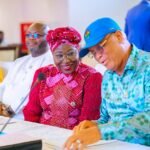


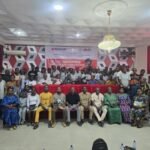
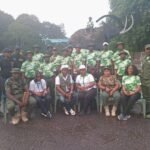

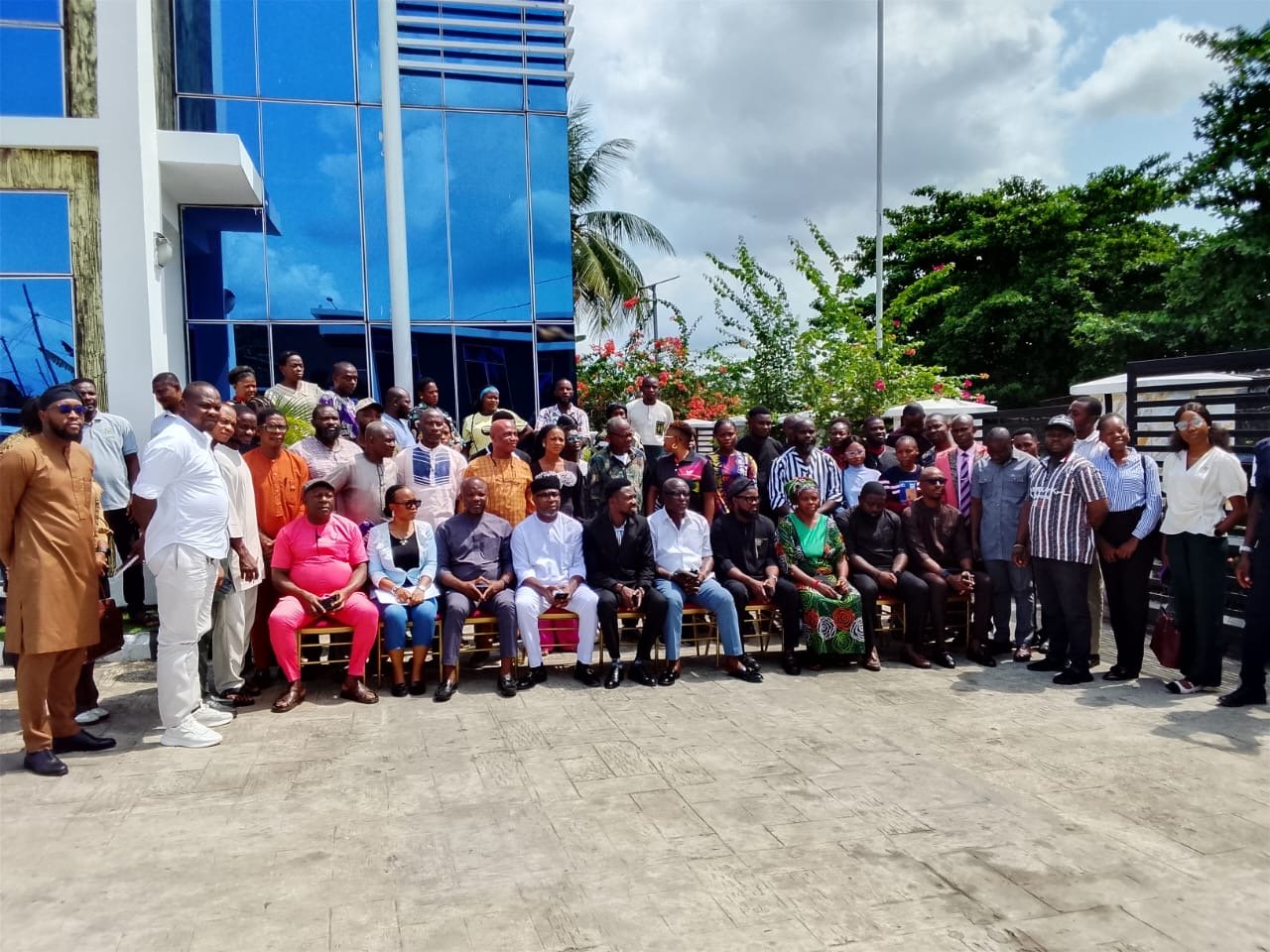
The organizers and participants.
By Anietie Akpan
Determined to have a thriving forest, cleaner environment and the skills necessary to thrive in a changing global economy, the United Nations Children’s Fund (UNICEF), Cross River State government and others, are ready to convert over 79,000 tones of waste generated annually in the state to wealth.
Already the State Government with support from UNICEF, is intensifing its push towards a sustainable “waste-to-wealth” economy by training youths on opportunities in recycling and green entrepreneurship aimed at providing hands-on learning experiences for young participants in the state.
This position which was made known on Wednesday in a two day capacity-building workshop, with the theme: “Transforming Waste to Wealth and Transitioning to a Circular Economy,” organized by the State’s Ministry of Environment with support from UNICEF, attracted stakeholders like, environmental experts, government officials, the Recyclers Association of Nigeria (RAN), and others.
Accordingly, the workshop resolved that sustained partnerships, youth engagement, and policy implementation are critical to transforming waste into wealth in the state.

The Chief of Field Office, UNICEF Enugu, Mrs Juliet Chiluwe in a goodwill message said, “UNICEF is proud to support the Cross River State Ministry of Environment on this initiative which places young people at the heart of climate action.
“By investing in green entrepreneurship, forest monitoring and sustainable plastic management, we are ensuring that the children and youth of Cross River State inherit thriving forests, cleaner environment and the skills necessary to thrive in a changing global economy”.
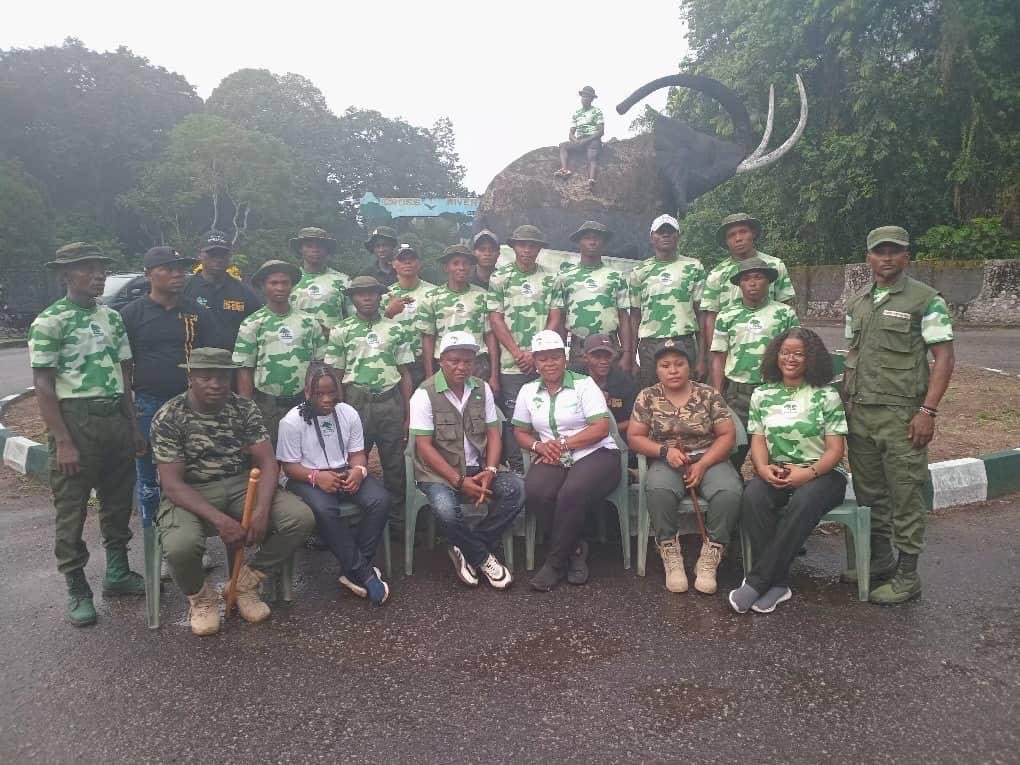
She said that the forest monitoring training in collaboration with the State Ministry of Environment and the State Forest Commission utilized data-driven approaches to track forest health, identify illegal activities in real-time and implement reforestation and replenishment strategies to restore forest ecosystems, bridging the gap between government enforcement and community-led advocacy which reduces pressure from deforestation, illegal logging and climate-induced degradation.
With the collaboration of the State Ministry of Environment and experts from RAN, Chiluwe further stated that “the technical depth of the program was strengthened, ensuring that participants have access to best practices in plastic waste value chains, organic waste composting, marine litter reduction strategies and coastal protection measures,
“We are positive the participants will develop green entrepreneurship skills that sets them apart in the current job market. We have ensured there are interactive sessions and networking opportunities aimed at building a robust ecosystem for green innovation in Cross River State”.
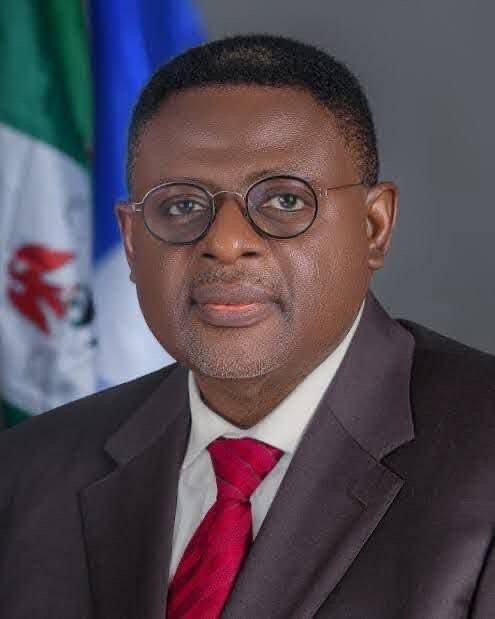
In his keynote address, the State’s Commissioner for Environment, Mr. Moses Osogi, described the workshop as a turning point in the state’s environmental and economic journey, noting that the gathering was aimed at igniting a revolution of green entrepreneurship among youths, in line with the “People First” agenda of the State Governor, Senator Bassey Otu.
He said, the state must shift from seeing waste as “a burden to recognizing it as a reservoir of untapped economic value in the face of climate realities”.
He explained that Cross River is embracing a circular economy model that promotes “reuse, recycling, and reintegration of waste into production systems”.
Osogi highlighted ongoing innovations under the UNICEF project, which include the conversion of plastic waste into interlocking tiles and construction materials.
The Environment Commissioner commended UNICEF for supporting youth-driven environmental initiatives and advancing sustainable waste management solutions.
He therefore charged the participants, especially the youth to explore opportunities in recycling, upcycling, and renewable energy, noting that the 2026 budget supports such innovations and encouraged them to see waste as a business opportunity and become “ecopreneurs” capable of building a cleaner and more prosperous state.
On his part, the Vice President of RAN, Victor Okunola, said the training was designed to help youths unlock the economic potential in waste.
He disclosed that Cross River generates about 79,000 tonnes of waste annually, describing it as a major opportunity for job creation and enterprise growth.
The Vice President called for “stronger policies, tax incentives, and investment in recycling infrastructure to support the sector’s expansion”.
RAN executive member Ola Oluwaseyi highlighted the dangers of marine litter and stressed the need for effective policy enforcement.