


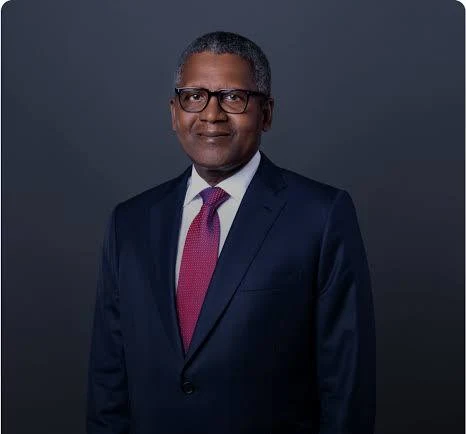
Aliko Dangote.
By Etim Etim
Aliko Dangote likes to tell us that he’s been fighting battles all his life and that his wealth is a product of the victories he’s recorded in those fights. But since his refinery began production of refined petroleum products last year, the industrialist has been waging the most brutal war. He had assumed that the Nigerian government would gladly discontinue importation of petrol to give way for his refinery to meet domestic needs. After all, no country would prefer to import what it is capable of producing. Importation kills jobs and fuels inflation.
But Nigeria is a different kind of country. At a press conference last week, Mr Dangote claimed that the government has been actively supporting fuel importation into the country. He accused the Nigerian Midstream and Downstream Petroleum Regulatory Authority (NMDPRA), the oil industry’s regulatory agency, of colluding with international traders and oil importers to frustrate local refiners through continued issuance of import licenses for petroleum products.
Dangote’s public spat with NMDPRA is not new. But this time, the industrialist has stepped a notch higher, accusing its chief executive of monumental corruption. He is not only fighting the oil mafia, but he’s up against the President’s family. Wale Tinubu, President Tinubu’s cousin, is one of Nigeria’s major fuel importers. His company, Oando Plc, posted a 44% increase in revenue to N4.1 trillion and N220 billion Profit-after-tax in 2024. Although Oando reported that its refined product volumes had declined by 64% to 599 KMT due to ‘’shifts in Nigeria’s domestic supply framework’’, the company would not abandon that line of business just yet. Oando is not the only fuel importer. Others are NIPCO, Bovas Oil; Eternal Oil; A A Rano; NNPC and a host of others.
These importers have already received import licenses covering about 7.5 billion litres of petrol for the first quarter of 2026, according to Dangote. The country consumes about 20 billion litres per year. To beat the importers, Dangote has slashed his petrol prices to N740 per litre at the pump. He is also waging a psychological and moral war against the chief executive of NMDPRA, Ahmed Farouk, accusing him of corruption.

In an advertisement placed in several newspapers on Tuesday which he personally signed, Aliko Dangote alleges that Farouk spent $5 million on his children’s school fees in Switzerland and Havard University last year. How could Farouk, a public officer, send his five children to expensive schools in Switzerland, if he were not engaged in corrupt practices? ‘’Nigerians deserve to know the sources of these sums of money paid by a public officer while many parents in his home state of Sokoto cannot afford to pay N10,000 school fees for their children and wards’’, the ad state. If this were not a politically poisoned environment in which corruption is routinely defended, justified, condoned or normalized, Farouk would be talking to the EFCC by now. If Godwin Emefiele, former CBN governor and top regulator of the banking industry, could be standing trial for corruption, why would Farouk, another top regulator, be treated differently?
But can the government completely outlaw importation of fuel, a business the President’s family member is deeply involved in, since we have enough in-country refining capabilities? Fuel importation imposes a strain on our foreign exchange reserves; leads to job losses in local industries and makes us vulnerable to global market fluctuations. Importation also means frequent fuel scarcity; high fuel prices; economic instability and disincentives to local producers. Right now, small refineries are having difficult time coping with competition from imported fuel.
On the other hand, Dangote refinery has brought some salutary impacts on the economy like the relative stability in the foreign exchange market due to the huge foreign exchange inflows; the disappearance of acute fuel scarcity and creation of thousands of new jobs. The fact that we have come to another Christmas without fuel scarcity is because of Dangote refinery. Yet, NMDPRA argues that importation is necessary to provide ‘’energy security’’. Put differently, NMDPRA believes that importation is necessary to offer alternatives to consumers.
If the government wants to provide an alternative to Dangote’s fuels and break his monopoly, the best thing to do is to fix the government-owned refineries and get them to produce. To resort to importation while those refineries are still comatose is a sabotage against the Nigerian economy. Many Nigerians are with Dangote in this fight. Donald Etiebet, former Petroleum Minister wrote on Monday, ‘’Dangote is coming out smoking loud and clear and ready for the fight. Let’s support him in this fight’’. Aliko Dangote is not lacking in support from his countrymen and women. The problem is whether the government has the guts to do the right thing.
Etim is a Journalist and Political Analyst based in Abuja.