



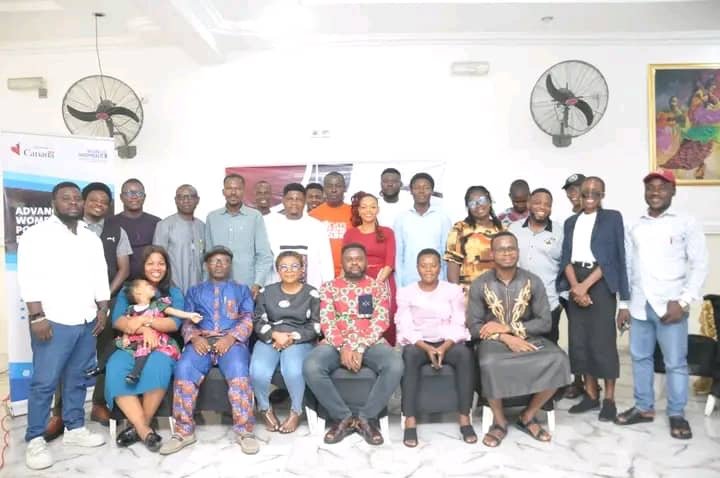
Media Participants during a roundtable discussion in Calabar, for the Proposed Special Seats Bill for Women.
By Tina Ezin
Stakeholders have called on the media to sustain public engagement around the proposed Special Seats Bill for women, insisting that stronger visibility and informed reporting remain critical as the National Assembly prepares to vote on the measure later this month.
Speaking at a media roundtable on sustaining momentum for the bill, Country Director of the International Training Research and Advocacy Project, Dr. MacFarlane Ejah, said Nigeria’s low ranking in women’s political representation shows the need for deliberate action.
He noted that while countries like Rwanda have surpassed 60 per cent female parliamentary representation, Nigeria stands at just about four per cent.
“The special seats bill for women in Nigeria is coming up because women have the potential to contribute to development, yet they are not getting seriously involved. Not because we do not have competent women.

“There must be a deliberate effort to bring our women, who are God-given talents, into the political space. That is why the Special Seats Bill is coming back again and why all sectors, especially the media, need to support it.” Ejah said.
The roundtable was organised by Gender and Development Action (GADA), which has been at the forefront of pushing for women’s inclusion in governance. Ejah commended the group, describing it as “consistent in advocating for women in leadership and governance.”
He explained the difference between the 35 per cent affirmative action and the proposed special seats, noting that while Nigeria is a signatory to global gender commitments, national compliance has remained weak.
“We sign conventions, but we don’t obey them,” he said. “Since the 35 per cent has not worked, the special seats bill creates a win-win that allows us to begin moving toward that target.”
Program Manager at GADA, Nnenna Ugbor, said the organisation convened the media to strengthen the visibility of the bill and ensure that advocacy does not lose steam.
“Women’s voices in governance, politics and decision-making remain low. The special seats bill is one strategy to change that. But the media is a critical component in sustaining momentum.” she said.
Ugbor said the bill also covers women living with disabilities, young women and others who are often sidelined.
She dismissed concerns that the engagement was coming too close to the expected vote, explaining that advocacy has been ongoing since March.
“The media has been involved from the beginning, state level, grassroots, zonal and national hearings. This is to ensure they do not relax but continue to push,” she added.
She acknowledged potential challenges, including getting more women to emerge as candidates if the bill succeeds, but said GADA is also working to encourage women to step forward. “It does not end with advocacy. We will continue to talk to women to come out and take up leadership positions,” she said.
Stakeholders at the roundtable agreed that stronger media involvement could help shape public opinion and mobilise support as the bill progresses to voting stage at the National Assembly.