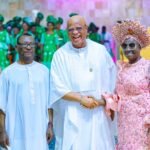








Archbishop Tunde Adeleye and his wife, Dorathy .
By Ita Williams, Calabar
A guest lecturer, Gospel Emah Isong, President and Founder of Christian Central Chapel, has called for a major overhaul of internal party politics in Nigeria.
He warned that the monetization of party structures continues to undermine credible leadership in the country.
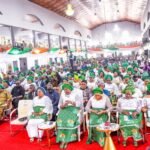
Isong made the remarks on Saturday in Calabar during a birthday colloquium held in honour of Archbishop Tunde Adeleye, former Archbishop of the Anglican Communion, Calabar, and his wife, Dorathy Tunde Adeleye.
The event took place at the Hogis Royale Banquet Hall on Bishop Moynagh Avenue, State Housing Estate,?Calabar, Cross River State.

According to the cleric, who spoke on the theme, “Governance and the Rule of Law: The Acid Test for the Nigerian Politician”, said, “the main problem with Nigeria’s electoral process is not the general elections themselves but the internal processes of political parties, which he said are often heavily influenced by money and manipulation long before the elections take place.
“Most times, even two years before the general election, people already know who will emerge because the internal party processes have been compromised,” he said.
He stressed that credible candidates who are loved by their communities should be allowed to emerge through transparent party processes. “If we can deal with the current tradition of monetized party politics, Nigeria’s political system will be sanitized,” Isong stated, adding that a cleaner political culture would produce leaders who genuinely represent the people.
While expressing optimism about the country’s future, the cleric noted that Nigeria already has laws capable of strengthening democracy but lamented that loopholes and weak enforcement often prevent them from serving their intended purpose.
“Yes, we have laws, but the real question is whether these laws are working for the benefit of the nation,” he said.
Also speaking at the event, the first discussant, Prof. Paul Ajah, stressed that the rule of law remains the defining factor between responsible leadership and authoritarian rule. “The rule of law distinguishes a leader from a warlord,” he said, explaining that governance must be guided by legal principles rather than personal power.
Ajah further identified what he described as three major challenges facing Nigeria’s political system: the “legacy of the big man” mentality, a “do-or-die” approach to politics, and a culture of impunity.
According to him, true governance can only thrive when leaders respect court orders, uphold the independence of institutions, and demonstrate a genuine commitment to building the nation rather than merely occupying positions of power.