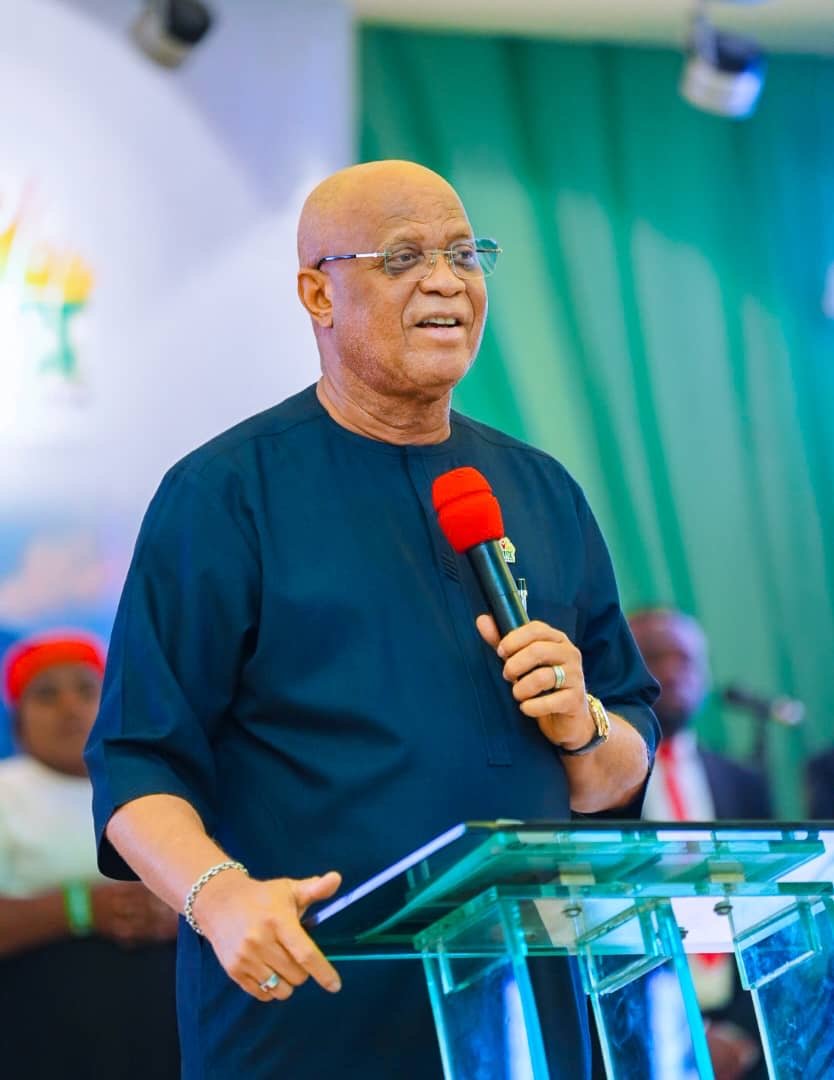






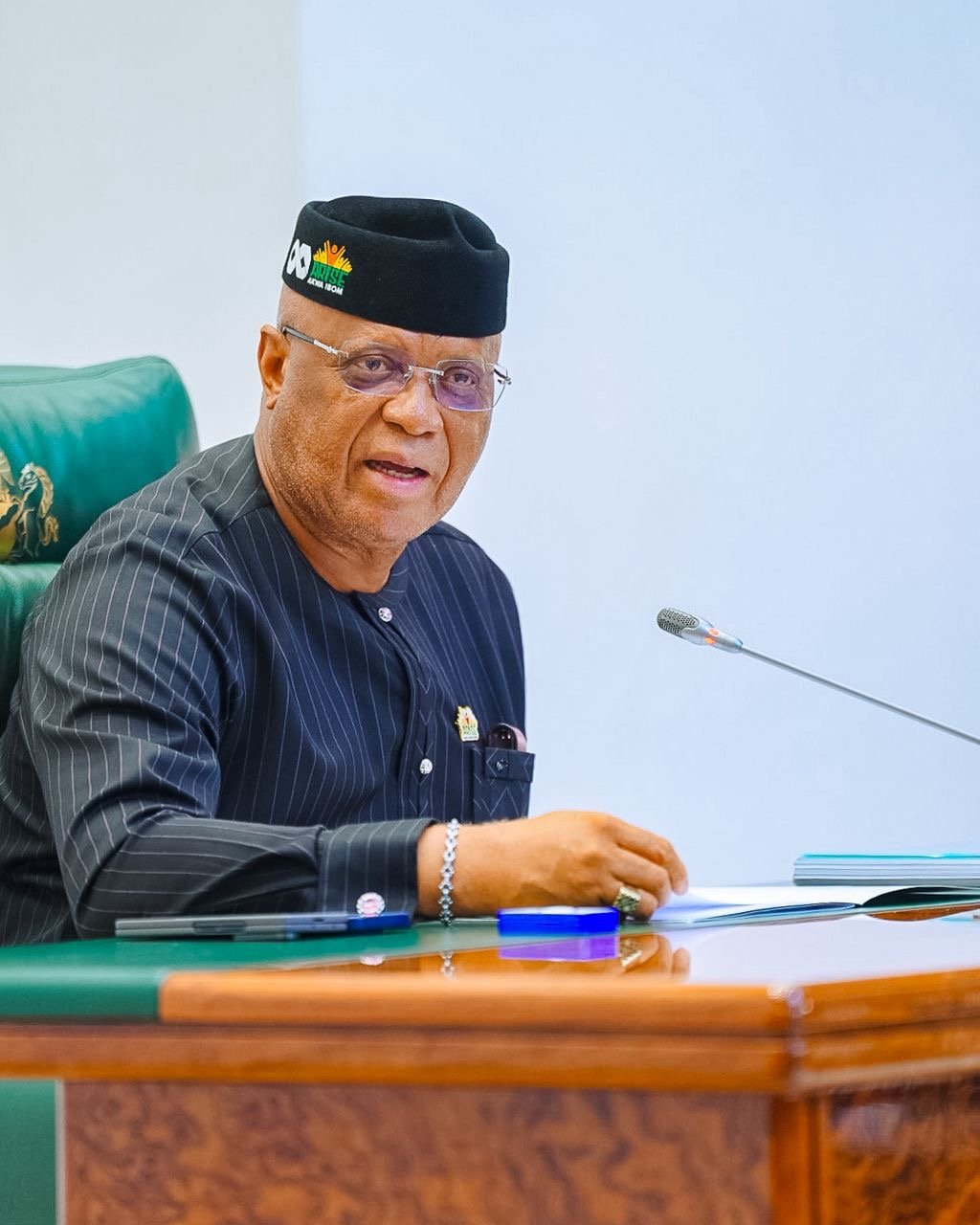
Gov. Umo Eno
By Etim Etim
Akwa Ibom State government announced this week that it had cleared all outstanding bank debts totaling N39.831 billion, including principal and interests and reduced gratuity backlog owed retired workers from N110 billion inherited from the previous administration to N80 billion as at December 2025.
Commissioner for Finance Emem Almond Bob, addressing a press conference in Uyo, said the government also grew its investment portfolio from N6 billion to N10 billion and recorded returns of N260.646 million for year ended June 2025. But the details of the portfolio were not given, neither did the commissioner say if the state has also exited foreign obligations. The government however noted that it has commenced publication of annual financial statements in line with international standards on fiscal transparency.
The liquidation of all bank loans by the Umo Eno administration is commendable. The bulk of these loans were obtained under the Akpabio and Udom Emmuael administrations, and at a time, the Debt Management Office (DMO) rated Akwa Ibom as one of the most highly indebted states. The then Minister of Finance and Coordinating Minister of Economy, Ngozi Okonji-Iweala was particularly alarmed at the Akwa Ibom situation which was characterized mounting debts in the midst of improved federal allocations. She said that the projects Akpabio was implementing were not worth more than 10% of the allocation the government was receiving from FAAC. It was a stinging and embarrassing attack against the ‘’uncommon transformer governor’’. Of course, the Akpabio administration pushed back vigorously against the minister’s intemperate allegations. But she was not yet done as she also accused other governors of indulging in ‘’reckless borrowing’’, and warned against the possibility long-term debt crisis for those states. Such robust exchange is rare these days.
The minister also criticized some governors of rushing to buy dollars with their monthly allocations as soon as FAAC allocations were shared in order to stash such funds away. She got into a fight with the Governors’ Forum over the Excess Crude Account. While she preferred the savings to be used as a buffer against hard times, the state executives wanted the account depleted and shared. To promote transparency, Okonjo-Iweala authorized publication of monthly allocations to state governments in national newspapers. The publications were an eye-opener for some of us who in the business of holding governments to account. We need more ministers like Okoni-Iweala.

Under the Udom Emmanuel administration in the state, judicious use of resources was never the forte of the government. Bank loans kept mounting. UBA, Zenith and later Globus Bank were the main lenders to the state, but the saddest aspect of it all is that there was not much to show for these loans in terms of physical development. Instead, the government went into executing harebrained projects like building coconut refinery! Sometime in 2017 (or thereabout), the government took over N2.7 billion from Zenith Bank ostensibly to fund the purchase and installation of cameras on major roads in Uyo. Till today, there is no single camera on any road in the city. It turned out that the money was diverted to funding political and other dubious expenses. I am on record for persistently calling out the then governor for the opacity with which our resources were managed.
By the time President Buhari took office in 2015, many states were in very bad financial position, with most unable to pay salaries. The federal government then arranged a N804.7 billion bailout package (non-interest bearing loans with easy repayment terms) to the states. Akwa Ibom secretly took the bailout loan, but the former governor denied benefitting from it. In addition to benefitting from the the bailout, states also resorted to borrowing from foreign sources to fund their capital projects. This is why the news of the exit of these obligations by Akwa Ibom is heartening. Just like the other 35 states, Akwa Ibom has benefitted from improved funding since President Tinubu’s reforms kicked in; and with prudent management of resources by the Umo Eno administration, the state is well positioned to pursue important developmental goals without reckless borrowings. Savings from debt servicing will now go into more productive areas.
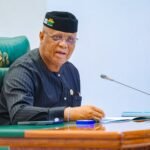
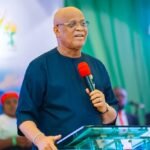
Gov. Eno’s prudence and transparency are notable, but he should do more. There is a need for a law to establish Akwa Ibom Wealth Fund that would mandate the government to keep away fixed income as savings and portfolio investments for future generations. A debt-free Akwa Ibom is an important achievement, but building for the future is a nobler thing to do.