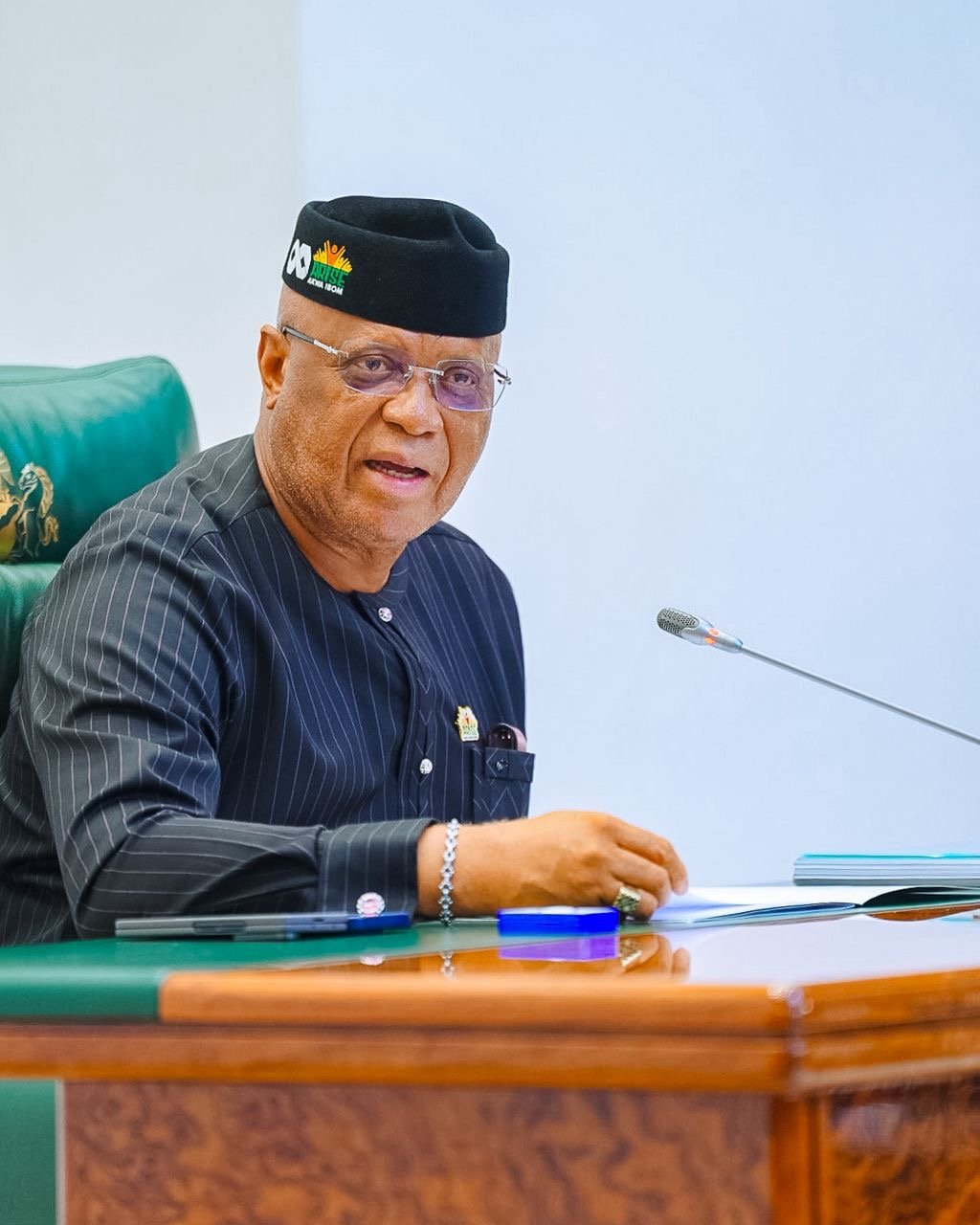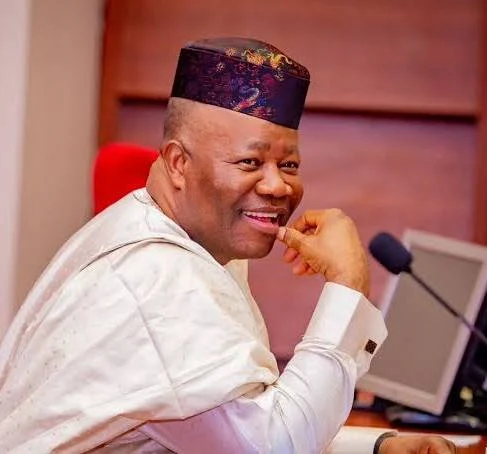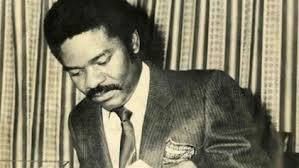
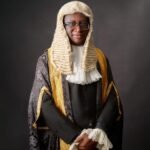





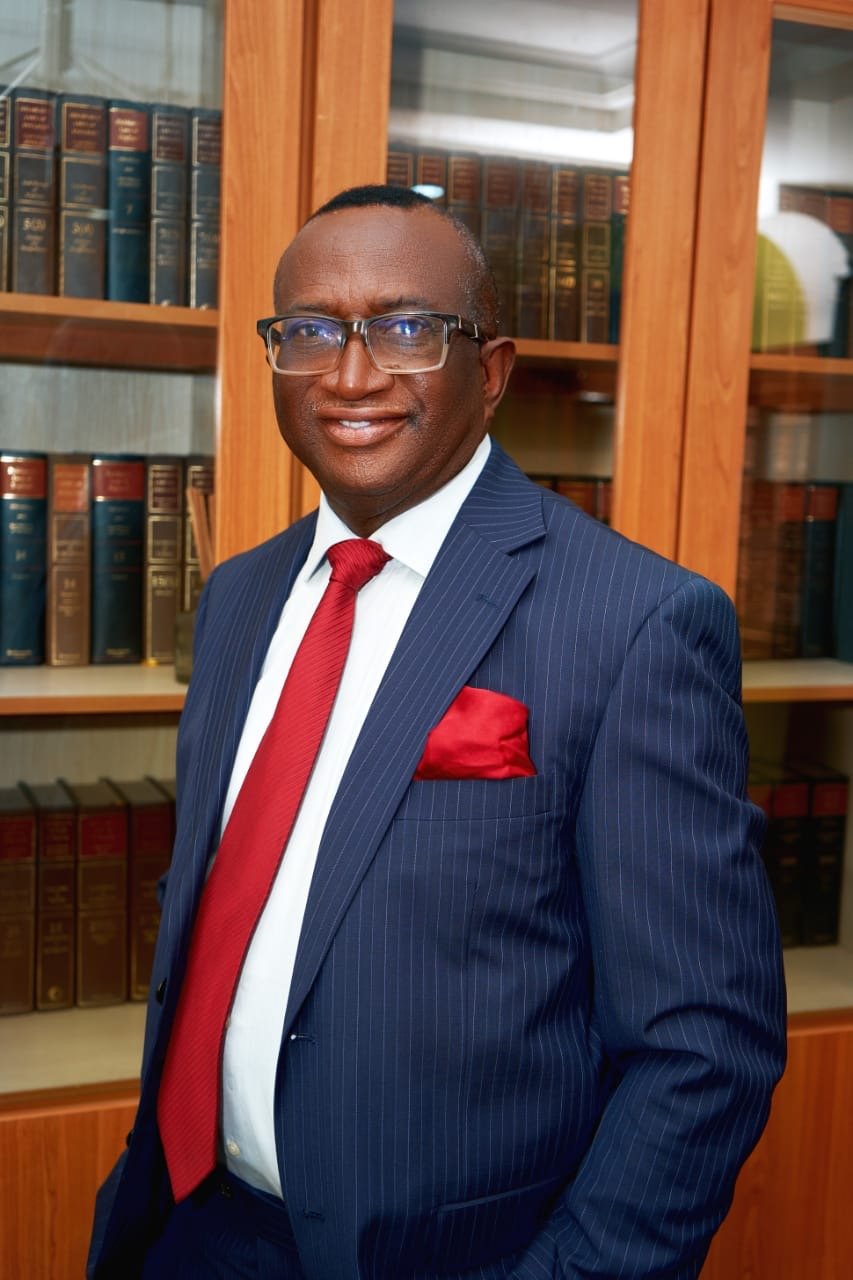
Sen. Victor Ndoma-Egba, SAN, the Pro Chancellor and Chairman of the Governing Council, Federal University, Oye-Ekiti (FUOYE).
By Sam Akpe
That was in the mid-80s. I was a cub-reporter—an intern at the Nigerian Chronicle in Calabar. That day, I was assigned to cover proceedings at the Cross-River State High Court, where my boss and group news editor, Mr. Nnamnso Umoren, had two days back, been committed to prison on the orders of the presiding judge.
Nnamnso (which means: What Have I Done?) was blamed for publishing a story which the presiding judge, in his wisdom, considered contemptuous of the court. After two nights of confinement, he was brought to the court to face trial.
As soon as the judge, in all his judicial majesty, took his seat, the case was called. Then I saw this sharp-looking gentleman, dressed in the legal attire, with his reading glasses sitting delicately at the roots of his nose. He stood up, took a bow, and introduced himself as Victor Ndoma-Egba, counsel for the defence.
Seated by his side was his partner, my big friend, the late Richard Ebri. It was my first time in court—as a reporter and an observer. I had been warned by the assistant news editor then, late Unimke Nawa, who was also there, not to cough so that I would not be a victim of another contempt.

Victor’s argument in favour of Nnamnso was so persuasive that I questioned my decision not to study law. He handled what looked like a complex issue with admirable ease. Before long, the judge, who had earlier sounded frightful, simply warned Nnamnso to go and sin no more.
That was my first encounter with Victor—as he is known by friends and colleagues. At that time, he and Richard were still with the legendary Kanu Agabi, SAN, who later became Attorney General of the Federation and Minister of Justice.
As soon as the court session was over, I moved towards Richard who promptly introduced me to Victor. I felt reverential before a man who had just rescued my boss from the claws of a dreadful judge. As insignificant as I was, and for inexplicable reasons, Victor took special interest in me from that day onward.
Decades later, I can confirm that Victor falls within the category of persons endowed with exceptional character,described by William Michael as “strong, positive personal magnetism.” Any person in this group could either be a braggart or a serene, decorous individual. He belongs to the latter.
Victor is certainly not someone who indulges in indecorous self-promotion. To borrow Michael’s words, he has deliberately grown his magnetic force such that without a shout, people are drawn to him for the good of his business and other interests.
One of the humbling moments of my life in my journey of privileged relationship with Victor is when he introduces me to people—especially when he was a senator. He would tell them: Sam and I have come a long way. In fact, I have known him all my working life. I have told him repeatedly to translate that into cash and bridge the gap between us.
I call him Chief—a genuine appellation arising from over half a dozen traditional honours bestowed on him by his people. In turn, he calls me High Chief Sam—I have no idea where he got that from. I used to tease him that it is a princely way of mocking my empty arsenal of traditional titles.
Victor’s sense of humour is inherent. Except you are close to him, you could take a harmless joke as a bloody stab.
Years back, I felt obliged to take my fiancée to Calabar, shortly before our wedding, to introduce to Victor. He took one unsmiling look at her and asked as though he was interrogating a client before a court appearance: young woman, why are you taking this kind of risk? You don’t know this man oh!
Momentarily, my wife-to-be looked confused. She turned in my direction and met my muffled laughter. Then she looked back at Victor. This time, the seriousness had evaporated. He was laughing, too. Then he said: this man travels a lot. When I need him, he is hardly available. Please hold him tight. He’s a good boy.
Fast forward to that day in 2004. I had left the National Assembly about two hours earlier for the Punch newsroom in Abuja. My phone rang. Victor was on the line. I picked and asked: “Chief, anything for the boys?” His response was typical but hair-raising: “High Chief Sam Akpe, is that how you talk to a Senior Advocate of Nigeria?”
My response: “Chief, I thought that is an abandoned aspiration, after several trials.” We both laughed. Then he said: “Well, you are behind the news. Tune to the NTA.” Still on the call, I turned towards the television which was already on. The scrolling news confirmed it. I saw his name as one of the new Senior Advocates of Nigeria. Wow!
I knew that before his inauguration as senator in 2003, he had filed what he considered his last application to be made a SAN, and had met all the demands. That afternoon, he had a call from one of his law school classmates who congratulated him after addressing him as Senator Victor Ndoma-Egba, Senior Advocate of Nigeria.
With that, Victor became the first Nigerian to become a SAN while serving as a senator. However, if becoming a SAN at that level sounds like an exclusive advantage, there is no doubt that Victor’s life, in the past 70 years, has been embellished with a lot of unprecedentedness.
Born in Ikom on March 8, 1956, Victor’s bread was buttered from birth. His father, Emmanuel Takon Ndoma-Egba, a respected lawyer and community leader, joined the public service and grew within the system to become Justice of the Court of Appeal—a position he held until retirement in 1992.
Victor’s mother, Madam Regina Nentui, was politically-minded. She was elected a Councillor for Ikom Urban while heavily pregnant with Victor in 1956. A few years later, she was elected Council Chairman for Ikom Local Government (1960-1963).
So, as his mother’s beloved, Victor took a shot at politics, and as his father’s son, he studied law at the University of Lagos and was called to the Bar at 22—in 1978. In 1993, he obtained his LLM at the University of Calabar and later attended specialty courses at the Irish Development Institute, before Stanford and Harvard Universities.
Despite being influenced by his parents in his choice of career, Victor originally sculptured his life for priesthood in the Catholic Church. His admission to Mary Knoll Secondary School—a breeding ground for future Catholic Priests—had already been accomplished. He admired the priesthood, and was in pursuit of it till the Nigerian Civil War placed a barrier on his path.
When the war started, his parents considered it too risky to send him alone to Ogoja where the school was located. Fortunately, Government Secondary School, which his mother helped engineer as a council chairman, was closer home. So, it took a deadly civil war that claimed more than a million lives, to end Victor’s priesthood ambition.
At 27, he was appointed into the Cross-River State Executive Council as Commissioner for Works and Transport, in 1984. He also doubled as acting Commissioner for Justice. There is no doubt that his father’s influence played back-stage roles in some of Victor’s public service appointments.
From the law chamber of Chief Kanu Agabi, SAN, which he joined in 1979, Victor, in 1987, went solo with Victor Ndoma-Egba & Co, which later changed to Ndoma-Egba, Ebri, & Co when his friend, Richard, left Chief Agabi to join him.
In those days in Calabar, theirs was predictably a law chamber of the future. It paraded a bunch of young intellectually glittering lawyers. Victor was on the upward swing. Always looking calm—even if pretentiously so—he became the poster boy of youthful success.
A lawn tennis addict, even at 70, he has refused to slow down. Next to tennis is his love for writing, reading, and travelling. At the last count, Victor has been to 54 countries.
One day in 2003, he called: High Chief Sam, will you welcome me if I come to that your Senate? How did Senate become my property! At that time, I was the Punch Chief Correspondent at the Senate. I asked back: Are you in the race? His answer: I have been conscripted into the race by my governor.
The story of his election to the Senate started as a joke, except that his state governor, Donald Duke, was the cheerleader. Victor was attending the International Bar Association Conference at Durban in South Africa when Duke called from Calabar. They spoke. No mention was made of election to the Senate. But when Victor returned, a table was already set for the political dinner.
His first election to the Senate was not bankrolled by him. The party took charge of the entire process. They guided him in filling the required forms, providing the needed information,taking pictures for the campaign posters, and making himself available at campaign grounds for introduction purposes. But he saw pepper during his re-election bids.
His three terms in the Senate were quite eventful. With 38 bills in his kitty, he served as the first Chairman of Media and Publicity Committee, Deputy Senate Leader, and Senate Majority Leader. With obvious political naivety, he often told me his desire was to be condemned to the Senate by his people. He had no other ambition. But that has not happened.
There are two telephone calls I have made to Victor that ended in tears. The first was when Richard died in January 1999, shortly after he and his wife attended my wedding.When I called, Victor’s secretary answered. There was no mobile telephone system in Nigeria at that time. Then Victor came on the line and declared: Sam, it’s true. Your friend has left us.
Again, tragedy struck like thunder in 2020, when Victor lost his adoring wife, Amaka, in a car accident. The news came as a social media rumour. I called him. He answered at the first ring: Sam, it’s true. We were all devastated. It is still a mystery how he emerged from that misfortune. Or has he?
Victor has served as Board Chairman of the NDDC, and Pro-Chancellor and Chairman of Council of two Federal Universities in Kogi and Ekiti States. As a serving senator, he led several delegations to international events, not just for the Senate, but for the government of Nigeria.
In the last 70 years, Victor has been activity-personified. His life has known no dull moment. At 70, he is still agile. His law chamber still parades young law graduates whom he is turning into sharp legal weapons.
In the last few years, he has visited the Vatican repeatedly. I keep wondering whether he is trying to renew his tutelage for priesthood. It is becoming obvious that in his sub-conscious, Victor is already a priest—without a parish. In 2022, Pope Francis had personally knighted him.
Victor keeps his friends. He loves his people. His philanthropic activities do not create headlines. They only touch hearts. From an appreciative nation, he has been honoured with Commander of the Order of the Niger (CON) and Officer of Order of the Federal Republic (OFR).
At 70, Victor has experienced stupefying fortunes and catastrophic moments. He has been favoured and deprived,all at the same time. His life has been an admixture of tears of joy and that of mourning. He has encountered the green pastures and the valleys of the shadow of death.
In politics, law, and social life, Victor is a non-advertised “front-page copy” whose silence could be annoying and whose calmness is a shield—a self-preservation strategy—irrespective of the expectations of his surroundings.
His words are measured. His intentions are thoughtful. He is not eager to please you at his discomfort—even if that means breaking a promise. His physique is trimmed to size. Victor does not grow beards. At 70, he is not planning to. I have been favoured with his friendship. Happy birthday, Sir.
Akpe is a journalist and a biographer