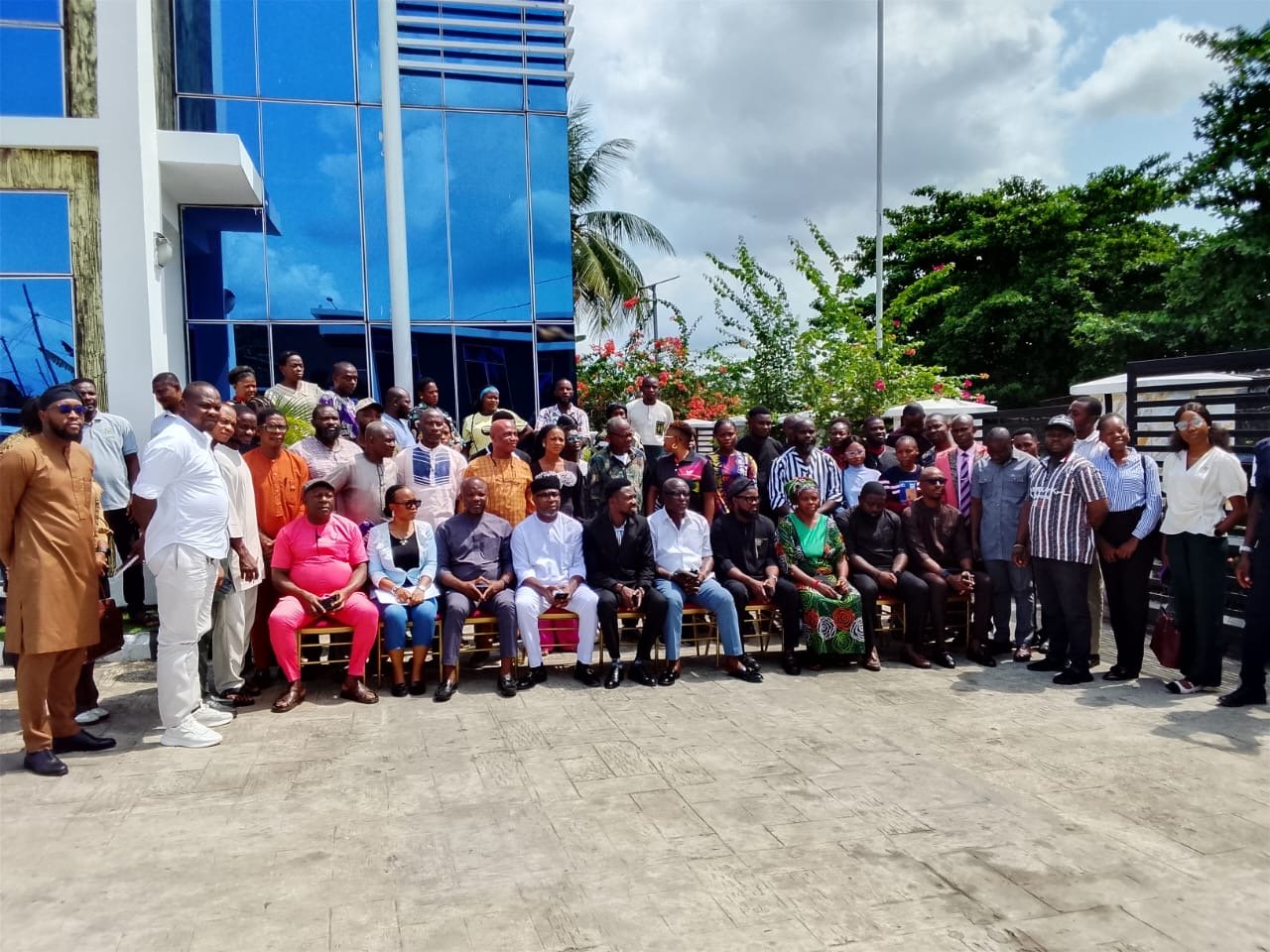









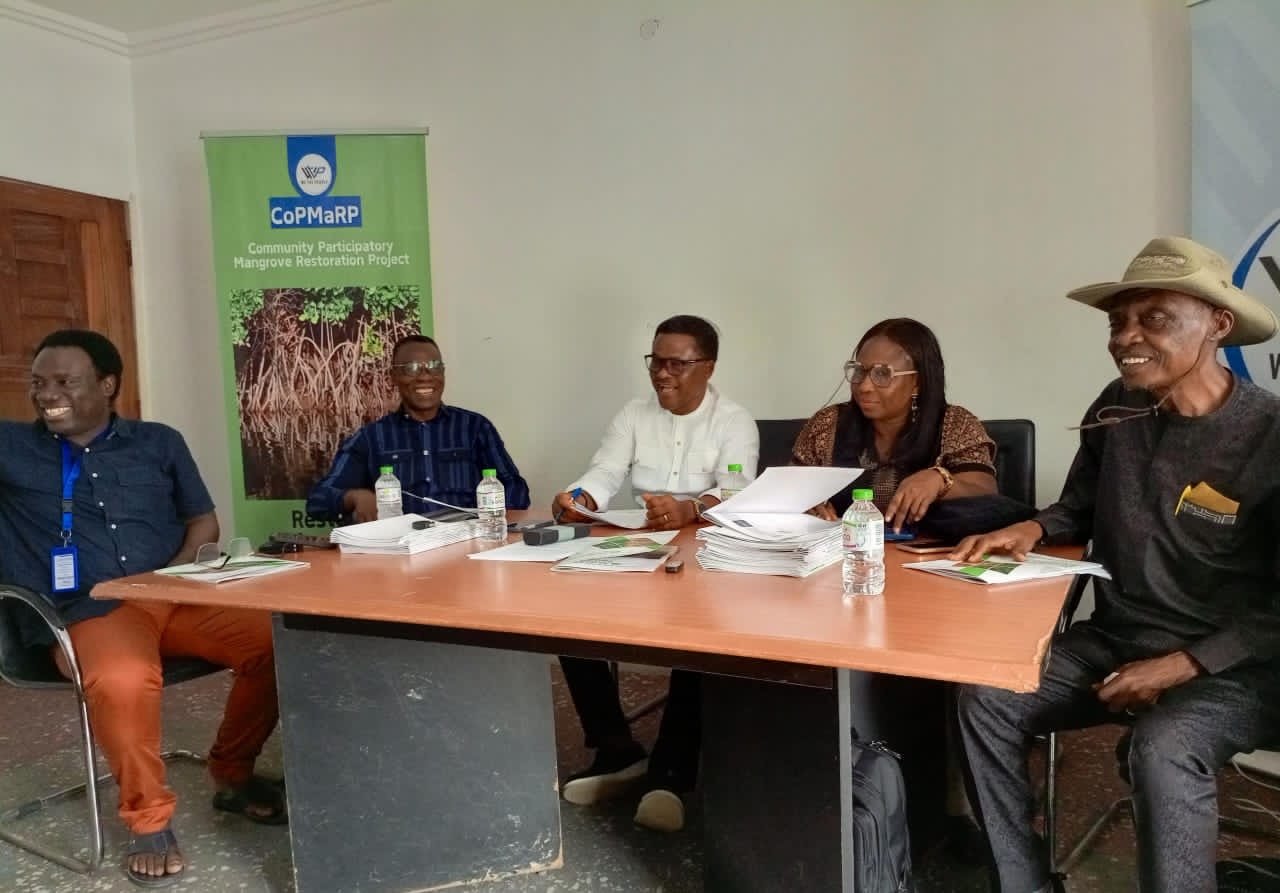
Environmental Experts and other forestry stakeholders during the stakeholders conference with the Journalists on Wednesday in Calabar.
By Ita Williams, Calabar
In a move to address the escalating issues of deforestation and forest crimes, Civil Society Organizations (CSOs) and key stakeholders in the forestry sector have called for a comprehensive review of the Cross River Forestry Commission Laws to enhance sustainable management.
This initiative aims to combat illegal activities and promote reforestation efforts in the state.
During a press conference held on Wednesday in Calabar, the Cross River State capital, Ken Henshaw, the Executive Director of “We The People,” emphasized the urgent need to upgrade the state’s forestry laws. He stated,
“Forest conservation and management are essential for global economic opportunities.” Henshaw’s remarks highlight the critical role that sustainable forestry practices play in the economy.

Henshaw pointed out that the existing laws impose penalties that are insufficient to deter illegal activities. He explained,
“If a truck is seized during the commission of a forest crime, the penalty is a meager N200,000, a sum most illegal loggers will gladly pay and continue their crime.”
This loophole in the law has allowed illegal logging and wildlife trafficking to flourish, undermining conservation efforts.
To strengthen the legal framework, Henshaw recommended implementing more stringent and proportionate sanctions that align with the severity of the crimes.
He also called for improved monitoring systems and enhanced coordination among enforcement agencies to ensure effective law enforcement.
Highlighting the potential of Cross River for ecotourism, Henshaw noted that the region’s rich biodiversity and stunning landscapes could generate significant revenue, create jobs, and incentivize conservation efforts.
However, he lamented the declining forest cover and the insecurity linked to illegal activities, which have hindered the state’s forestry potential.
“The new forestry law should embed ecotourism principles within forest governance,” Henshaw suggested.
He also advocated for legal backing for conservation-based enterprises and the encouragement of public-private partnerships to promote sustainable development.
“By protecting forests, we are also protecting economic opportunities for present and future generations,” he added.
Henshaw stressed the importance of community participation in forest governance, recognizing traditional knowledge systems, and establishing community-based monitoring mechanisms.
Odigha Odigha, the Chairman of the NGO Coalition for Environment and a renowned environmental expert, reiterated Henshaw’s concerns.
He revealed that Cross River has lost over 60 percent of its original forest cover, warning that without urgent reforms, the state risks losing one of Nigeria’s most valuable ecological assets.
“Cross River is home to Nigeria’s largest and most biodiverse tropical rainforest ecosystem,” Odigha stated.
He stressed the dire consequences of inaction, noting that large areas that were once dense rainforests have now become degraded lands and grasslands.
“If urgent reforms are not undertaken, we risk losing one of Nigeria’s most valuable ecological assets permanently,” he cautioned.
Odigha’s remarks serve as a stark reminder of the urgent need for action to protect the region’s forests.
The call for a review of the Cross River Forestry Commission Laws reflects a growing consensus among experts and stakeholders that immediate action is necessary to safeguard the environment.
The CSOs said the proposed reforms aim to create a more robust legal framework that can effectively combat illegal logging and promote sustainable forestry practice.