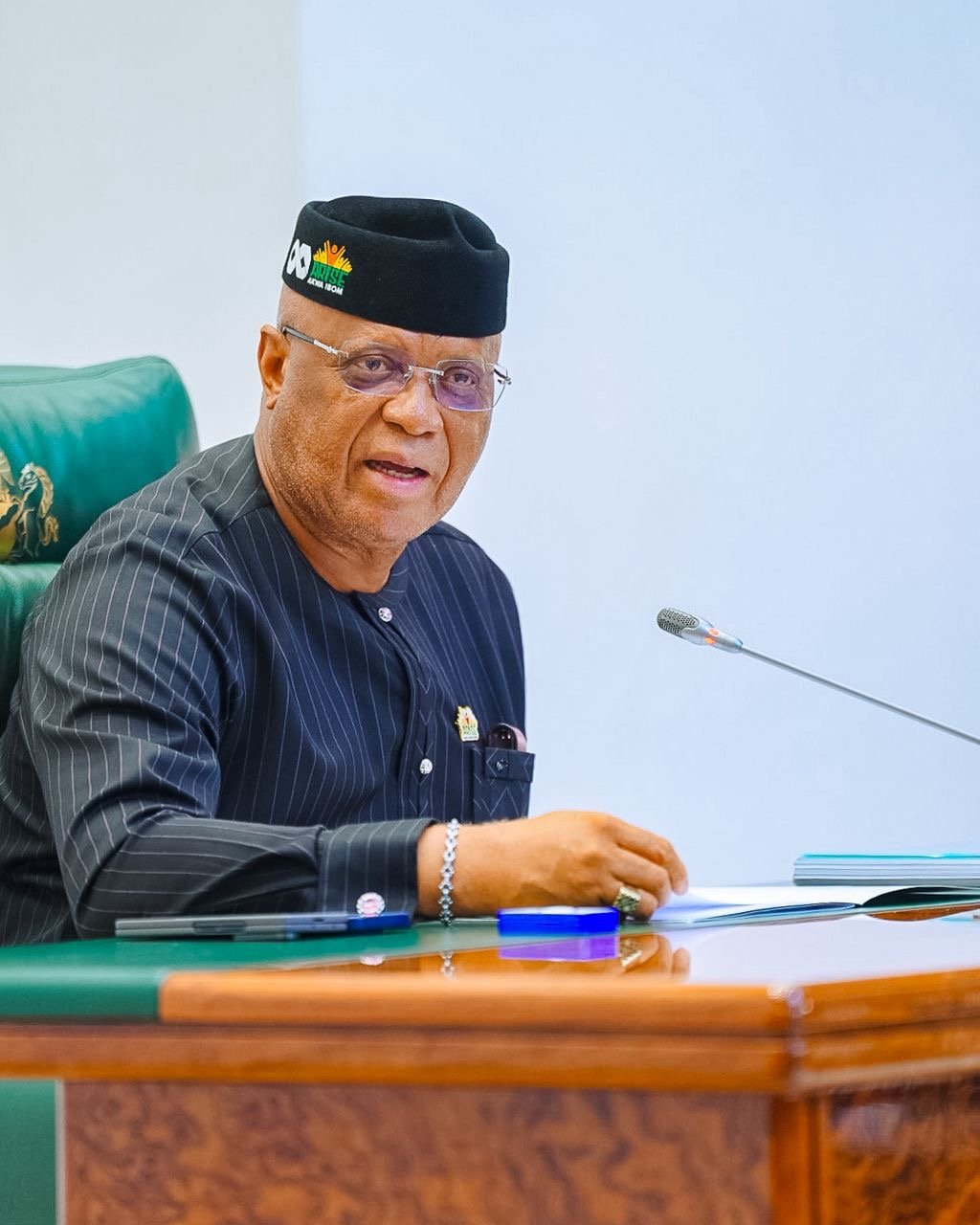









Governor of Akwa Ibom State, Pastor Umo Eno.
By Uwem Jonah Akpan
I wish to refer to a press statement issued with the above title by Uko Essien Udom, SAN, in his capacity as the Attorney-General and Commissioner for Justice, Akwa Ibom State, dated 6th of January 2026, concerning the legal status of the Stubbs Forest Reserve, known by the Ibibio as “Akoiyak”, and address a historical misnomer which the said government statement pontificated.
The critical issue is contained in paragraph three of the statement, thus: “contrary to the claims being circulated, the historic litigation, the case of Ntiaro and Ikpak Vs. Ibok Etok Akpan and Edoho Ekid, culminating in the 1918 decision of the Judicial Committee of the Privy Council did not vest ownership of Stubbs Creek land in any ethnic group or community. The final judgment merely dismissed the claims before the court and granted title to no party whatsoever. Any assertion to the contrary is false, misleading and a distortion of the judicial record”.
This author does not understand the hidden intention of the Government of Akwa Ibom State, as demonstrated through its “legal mouthpiece” – (the Attorney-General & Commissioner for Justice), and the methodology of interpretation applied in the matter, however, it should be noted that the statement is historically false, thus very misleading. This is because there is no piece of land on the surface of the earth that does not belong to a particular community. This assertion includes the portion of land known as “Akoiyak”- the Stubbs Creek Forest Reserve. In fact, that is the reason the colonial authorities did not forcefully grab the said piece of land. Rather, copious evidence show that the colonial agents, rather consulted and negotiated with many Ibibio (Eket) communities before the colonial imposition was effected.
The Ibibio Land/Littoral

It is known that the Ibibio presence in Nigeria has enjoyed great antiquity. Talbot rightly points out that the earliest inhabitants of South Eastern Nigeria were the Ibibio. The Ibibio occupy the geographical region of Southeastern Nigeria or what was described by the colonial administration as the Six Ibibio Districts of Abak, Eket, Ikot Ekpene, Itu, Opobo (Ikot Abasi) and Uyo in the Old Calabar Province.
Available written and ethnographic records establish that Ibibio land “stretches from the right bank of the river formerly called Opobo but which is now, as a result of boundary adjustment, Ikot Abasi River, the estuary of which used to be known as the mouth of the Imo River as it flows into the Atlantic Ocean and now constitutes the Western boundary separating Akwa Ibom State of Nigeria from both Rivers State and Abia State of Nigeria to the Cross River and beyond in the East, and as far as the international boundary separating Nigeria from the Cameroon Republic. The Ibibio are a coastal people; the sea-board including the Bight of Bonny formerly the Bight of Biafra washes the shores of the Ibibio country all along the whole of the Southern coast”.
Forde and Jones in the “Igbo and Ibibio Speaking-Peoples classify the Ibibio” thus:
Main Sub-Groups Location
1. Eastern or Proper Ibibio, Uyo, Etinan, parts of Eket, Ikot Ekpene, Abak and Ikot Abasi.
2. Western Ibibio or Annang Abak and Ikot Ekpene Divisions, plus parts of Umuahia and Aba Divisions in Abia State.
3. Northern Ibibio or Enyong Parts of Itu, Calabar and Ikot Ekpene Divisions plus parts of Bende in Abia State.
4. Southern Ibibio Oron and parts of Eket Division.
5. Delta Ibibio or Andoni Ibeno, parts of Eket and Ikot Abasi Divisions.
6. Riverine Ibibio or Efik Calabar and parts of Itu Divisions.
N/b: This Table has been modified in the light of current political developments in Nigeria leading to the re-adjustment of administrative boundaries (see Ekong Ekong, Sociology of the Ibibio: A Study of Social Organisation and Change. Uyo: Modern Business Press, 2001, pp. 2-3).
The Ntiaro and Ikpak Vs. Ibok Etok Akpan and Edoho Ekid Case.
The Ntiaro and Ikpak Vs. Ibok Etok Akpan and Edoho Ekid case began in 1914 between two settler communities in Ibibio land – Mkpanak and Ubenekang. The crux of the matter was the rights of the plaintiffs (Mkpanak) to certain land adjoining a community known as Mkpanak (otherwise known as Afaha Ibeno), where they were allotted by the Ibibio (Ekid Afaha in particular) to settle. The dispute arose owing to another settler community known as Ubenekang claiming the right to build huts on this land without the plaintiff’s permission.
When the Ibibio land owners became aware of the dispute by the “recent settlers in Ibibio land”, the Ibibio, through their representative, Chief Edoho Eket Udosen appeared and applied to be joined as defendant, on behalf of the people of Usung Inyang and Eket people. This request was granted and the case was settled in favour of the Ibibio land owners. The people of Mkpanak appealed and dragged the case to the Privy Council in London and the case was eventually decided in favour of the Ibibio in 1918.
Ibeno Settlements in Ibibio Land.
Ibeno consists of seven traditional settlements in the Southern part of Ibibio land. They are Okoroutip (Ikot Uttip), Ntafrre, Atabrikang, Opolom (settlements in Oniong Clan, Onna Local Government Area), Ubenekang, Mkpanak and Iwochang (settlements in Ekid Afaha, Ekett Local Government Area). (see South-Eastern State of Nigeria Gazette, Notice No. 699, Vol. 6, 1973, p. A, 113)
Ibibio Disposition to Land.
Edet Akpan Udo in his seminal work, “Who are the Ibibio?” aptly captures and states the traditional disposition of the Ibibio towards their land thus: “the Ibibo pre-colonial economy depended to a large extent on their land. From time immemorial, the Ibibio attached great importance to their land. They regarded it as their “First Mother”. It is their Mother Earth, because it is the soil which is their source of water: the rivers, seas and ocean which were so much part of their every-day life….It is in them that some of their water deities…lived….It is the soil which bore them, so to speak, for it produced cash crops. It is this soil that their ancestors were buried…the living would in turn be buried there with their ancestors. The Ibibio also believe that, without their land, they would be dead men, women and communities….They would do nothing to profane the land…According to the Ibibio people, the land was given to them in trust by their ancestors…the land….thus was passed on from generation to generation.
The Absurdity of the Attorney General & Commissioner for Justice’s Statement
It should be noted that the statement by the Attorney-General & Commissioner for Justice is absurd and his interpretation very elementary. It is historically untrue and misleading. This elementary interpretation of the law should be publicly withdrawn with apology. The “Akoiyak” (Stubbs Creek Forest Reserve) is an integral part of Ibibio (Eket) land and no inch of the said ancestral land which is being “scrambled” upon will be partitioned by any authority.
Such unguarded statement can open the flanks for the Ibibio treacherous kinsmen, who, as “wolves in ship clothing”, are scavenging to grab Ibibio littoral for the realisation of the imaginary Obolo State. This statement poses existential threat to the Ibibio as a whole.
Akpan, PhD is a Consultant Historian, writes from Uyo, Akwa Ibom State, Nigeria